Obesity
Sadly the most common form of malnutrition in pets in the UK is the over consumption of calories resulting in obesity

The term obesity is used to describe a condition that is more serious than just being overweight. When a dog or cat is classed as obese, it means that their fat has now reached the stage where their bodies struggle to maintain good health.
It is estimated that 44% of cats and nearly half of the UK's dog population are overweight or obese . With this in mind, this puts our beloved pets at risk from health problems which are likely to adversely affect quality of life. This rapidly increasing problem is now so significant that the World Small Animal Veterinary Association have officially classed canine and feline obesity as a disease .
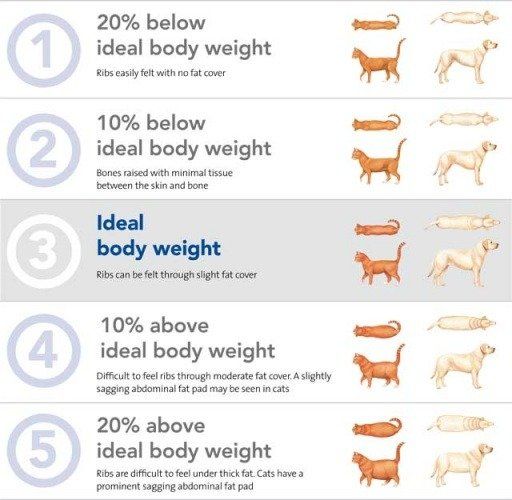
How can you tell if your pet is obese?
They best way to determine if an animal is overweight, is to use a body condition score. An ideal score would be 3 out of 5. Meaning your pets ribs and spine can be felt through a slight fat covering. Scores higher than this will predispose your pet to some life limiting conditions.
Problems associated with obesity
Reduced life span
Arthritis
Urine incontinence
Back problems
Cruciate ligament problems
Heart disease
Breathing difficulties
Diabetes
Skin disease
Cancer
Hormone problems
Obesity can significantly decrease life expectancy and quality of life. Anaesthetic and surgical risks also are significantly higher in obese pets.
Combating obesity in cats and dogs
There are many factors which increase the risk of your pet becoming obese. But predominantly it is down to the owner over feeding .
- Food ought to be measured daily for the desired body weight
- Regular exercise needs to be part of a daily routine – E xercise alone will not help your pet lose weight
- Feed the correct diet for your pets life stage
-
Avoid giving additional treats and scraps of human food